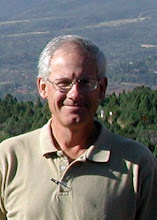
In the early 1980's, while working for Allied Chemical Corporation in Hopewell, Virginia, I had extraordinary freedom to quench my thirst for "why things go wrong."
Since I was living about 2 hours from Washington D.C. at the time, I was able to travel there often. I visited museums, the National Archives, as well as NASA and National Transportation Safety Board (NTSB) headquarters.
In my reading of formal investigative reports, I became especially interested in the NTSB, the way they are structured, the way they investigate incidents, and the obstacles they encounter. I remember calling them up one day, asking if I could interview one of their leaders, simply to learn about how they did things. I didn't know if they'd accept my request, but they did.
When I arrived, I was met by Thomas DeW. Styles, the Director of Accident Investigation for the National Transportation Safety Board. I had no idea they'd let me talk to the Director. I spent hours with this man, who allowed me to tape our conversation. I left with 3 volumes of books describing the workings of the NTSB, as well as about 50 pages of eventually transcribed notes, and a personal invitation to come to an upcoming open proceeding in New York City about a recent railroad incident.
One of the things I learned from Tom Styles was the emphasis they place on the "Go Concept."
The following text has been copied from http://www.ntsb.gov/abt_ntsb/invest.htm. I am copying it here because sometimes these links become inactive or out of date.
From the above NTSB link:
The NTSB "Go Team"
At the core of NTSB investigations is the "Go Team." The purpose of the Safety Board Go Team is simple and effective: Begin the investigation of a major accident at the accident scene, as quickly as possible.....
During their time on the "duty" rotation, members must be reachable 24 hours a day by telephone at the office or at home, or by pager. Most Go Team members ..... have tools of their trade handy -- carefully selected wrenches, screwdrivers and devices peculiar to their specialty. All carry flashlights, tape recorders, cameras, and lots of extra tape and film.
The Go Concept has been part of Failsafe's training ever since.
Failsafe acknowledges three major forms of evidence. We call them "The 3 P's:
People know things, the Physical manifestation tells us things, and history (Paper) can tell us things. (People, Physical, and Paper).
From the NTSB, Failsafe also acknowledges that all 3 forms of evidence is evaporative. It is very similar to dry ice, which starts to evaporate immediately on exposure to abient conditions.
All facilities that are sincere about learning from things that go wrong ought to have Go Teams, with Go Bags. I consider the presence of these "teams" and "bags" a litmus test for the sincerity of these kind of efforts.
In a future post, I will share the BEST Go-Box I have ever seen. It was assembled by an investigator operating out of a refinery.
Showing posts with label evidence. Show all posts
Showing posts with label evidence. Show all posts
Tuesday, February 16, 2010


Tuesday, February 02, 2010
The Problem with WHY Trees
In a past post, I tried to explain a little about the origins of the Why Tree. As I said, they are a spin-off-of Fault Tree Analysis. Fault Trees, however, are classically constructed in the design phase of a project to help determine the mathematical probability of specific, catastrophic events.
Why Trees were originally developed by myself to help an investigator navigate through an investigation. I developed their use in the 1970's, 80's when I was Principal Investigator in a chemical company, and then in the early 90's as a Principal Investigator for hire (through Failsafe).
WHY Trees became my way of keeping control of the investigation. Even more, it seemed that every investigation I led yielded different WHY Tree methods. I became enamoured by them. I've written a little about these methods in "What You Can Learn from Things that Go Wrong,.....", and have listed a few of them below:
The 5,3, 1 Technique
Either / Or
Comprehensive / All Inclusive Test
Aside from the methods themselves, I discovered that WHY Trees were a great way to describe the time-line (the bottom elements occur first, and the top occur last). I also discovered the uniqueness in using WHY Trees for investigating chronic failures, and even found a way to tie monetary values to each block on the "Chronic WHY Tree."
In short, the WHY Tree became associated with "Bob Nelms," and his training. Looking back, however, this was all a monumental mistake.
I don't know why I hadn't seen it before, but suddenly I became aware of what was happening. When an investigatable incident occurred, many of my clients were quickly gathering their most experienced people (pertaining to an incident) into a room to construct WHY Trees.
Picture it. Ten to twenty experts in a room, debating "where the blocks should be placed," using their expertise to "figure out the most probable causes."
AND THEN they'd go out and gather evidence in support of their hypotheses.
When I found out how people were abusing these marvelous WHY Trees, I wanted to puke. I never suggested using WHY Tree in this manner.
The instruction has always been "gather evidence first, and then develop the WHY Trees."
There are no short cuts to discovery! There is no computer program, or software to purchase to process yield the answers we seek. People have to roll up their sleeves and get out there in the dirt. They also have to actually talk to other people. These are the things that most engineers would rather not do.
Concurrent to my disgust, I started teaching people how to do Mini-LCA's. Mini-LCA's follow almost all the steps of the full-scale LCA's, but don't involve as many people. When I was given only 4 hours to teach people how to do a Mini-LCA, I had to consider what to cut out of the training.
I decided to see what happened if I cut out the WHY Tree.
BINGO, it worked great. Not only that, but people who were familiar with the tedium of drawing WHY Trees were elated that I had dropped them from the 4 hour training.
Then I started to wonder. "I wonder if all those past investigations I led could have been done without WHY Trees?" One investigation after another, I queried my mind and discovered that:
The answers to our questions came from immersing ourselves in the evidence -- not by focusing on the WHY Tree!
I changed all of Failsafe's training to reflect this discovery. The engineers do not like the change. Engineers LOVE WHY Trees (I am an engineer myself, and I LOVE WHY Trees). But I discovered that WHY Trees are a diversion. They make us feel as if we're doing something, when we're actually biasing ourselves -- making it much more difficult to be SHOCKED with the truth.
Yes, WHY Trees have their place -- and yes they can be useful. But in the vast majority of cases, all we need to do is slow down and look at the evidence, because:
Everything we need to know about our existence is staring us right in the face, if we'd take time to look.
Subscribe to:
Posts (Atom)